Senovinis lietuvių Kalėdų eglutės puošimo menas
LT [english version below]
Senovės lietuvių eglutės puošimo tradicijos neatsiejamos nuo archajiško pasaulio suvokimo, kuriame Kalėdos buvo ne tik šeimos susibūrimo metas, bet ir kosminio virsmo – saulės sugrįžimo – šventė. Žalias medis ar jo šaka šiuo laikotarpiu veikė kaip gyvybės, atsinaujinimo ir nenutrūkstamos metų tėkmės ženklas. Nors šiandien eglutė suvokiama kaip savaime suprantamas Kalėdų atributas, seniau jos forma, vieta ir puošyba turėjo gilią ritualinę prasmę.
Kai kuriose Lietuvos vietovėse, ypač Vilniaus krašte, dar palyginti neseniai buvo išlikęs archajiškas paprotys per Kūčias už stalo kampo pastatyti eglės šaką, o jos šakomis papuošti namų duris iš lauko. Tiesioginių duomenų, ar šios šakos būdavo gausiai dekoruojamos, trūksta, tačiau aišku viena – eglei, kaip visžaliam medžiui, buvo priskiriama ypatinga maginė galia. Saulės grįžimo metu ji simbolizavo gyvybės medį, jungiantį požemį, žemę ir dangų, praeitį, dabartį ir būsimą laiką.
Žalio medžio puošimo papročiai žinomi ir kitose senosiose kultūrose. Senovės Graikijoje saulės grįžimo šventėse buvo puošiamos lauro ar alyvos šakos – jos rišamos baltais ir raudonais kaspinais, apkabinamos obuoliais, figomis, kitais vaisiais. Tokį medelį nešiodavo po miestą ir namus, tikint, kad kartu su juo į vidų įžengia laimė, džiaugsmas ir turtas. Panašių papročių pėdsakų randama Romoje, Gruzijoje, o vėliau – ir Vidurio Europoje. XVI–XVII amžių šaltiniai rodo, kad eglutė jau buvo statoma Vokietijoje ir kituose kraštuose, o nuo XVII amžiaus pradžios apie jos puošimą žinome ir iš Alzacijos.
Šiuose regionuose eglutė buvo puošiama riešutais, obuoliais, degančiomis žvakutėmis. Šie papuošalai nebuvo vien dekoratyvūs – jie turėjo aiškią apeiginę paskirtį. Buvo tikima, kad visa tai skiriama per Kalėdas į namus užsukančioms protėvių vėlėms, kurios galinčios paveikti būsimą javų derlių, šeimos gerovę ir likimą. Dėl šios priežasties per Kūčias buvo draudžiama judinti eglutės papuošalus. Kai kur tikėta, kad nuo eglutės paimtas obuolys ar riešutas galėjo supykdyti vėles ir užtraukti nelaimę. Tik antrąją Kalėdų dieną buvo leidžiama valgyti nuo eglutės vaisius – jau kaip palaiminimą, nešantį sėkmę.
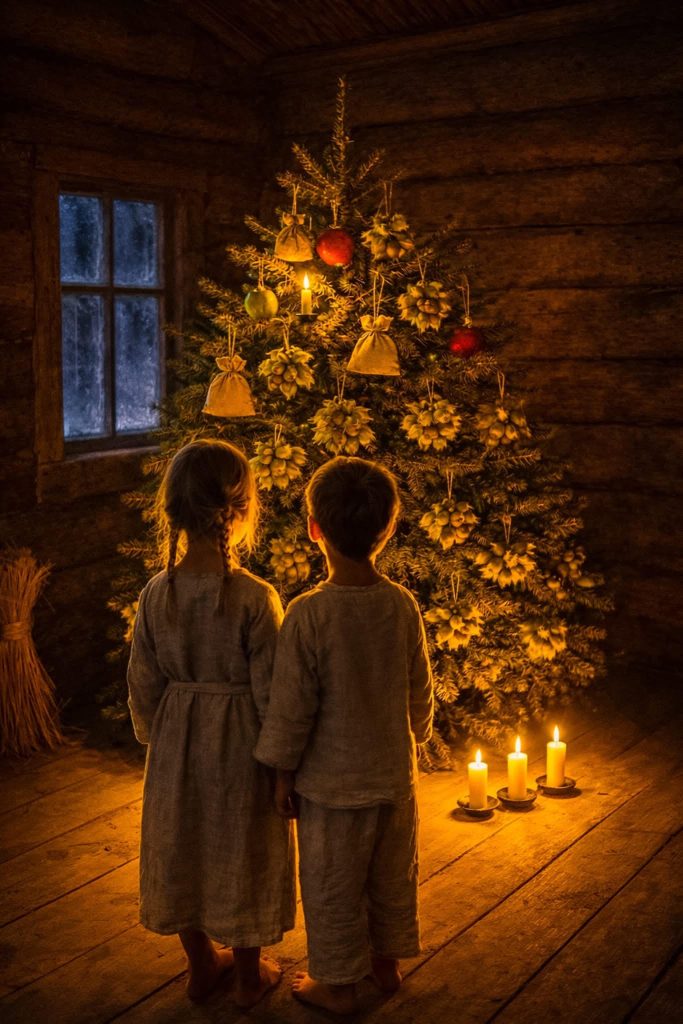
Ypatingą reikšmę eglutės puošyboje turėjo riešutai. Jie simbolizavo vaisingumą ir buvo siejami su būsimo derliaus gausa. Be agrarinės prasmės, riešutams priskirta ir erotinė, šeimyninė magija – manyta, kad jie gali sužadinti meilę, sustiprinti santuokinius ryšius. Neatsitiktinai per Kalėdas jaunimas, ypač merginos ir jaunos marčios, nešiodavosi riešutus dailiuose maišeliuose ir dovanodavo vyrams. Ypatingu ženklu laikytas per Kalėdas rastas dvilypis riešutas – vadinamasis keimeris. Jis buvo siejamas su meile, vedybų pažadu, tarpusavio ryšio stiprinimu ir net materialine sėkme.
Obuoliai, nors apie jų apeiginę reikšmę išliko mažiau žinių, taip pat užėmė svarbią vietą. Agrarinėse ir šeimyninėse apeigose, ypač vestuvėse, obuolys simbolizavo vaisingumą, pilnatvę ir gyvybinę jėgą. Lietuvių tautosakoje obuoliui dažnai priskiriama stebuklinga, antgamtinė galia – su juo herojus gali pasiekti tai, ko trokšta, sužadinti meilę ar pakeisti likimą. Neatsitiktinai pasakose minimi auksiniai, sidabriniai ar net deimantiniai obuoliai.
Svarbi eglutės puošybos dalis buvo ir žvakutės. Jų deginimas siejamas su protėvių vėlių atminimu ir šviesos grįžimu į pasaulį. Ugniai buvo priskiriama apsauginė galia – manyta, kad ji saugo šeimą nuo ligų, nelaimių ir piktųjų jėgų. Degančios žvakės eglėje kūrė jaukią, sakralinę erdvę, kurioje susitikdavo gyvieji ir mirusieji, praeitis ir ateitis.
Taigi senovės lietuvių eglutės puošimo tradicijos buvo kur kas daugiau nei estetinė praktika. Tai buvo sudėtingas apeiginis veiksmas, jungęs agrarinę magiją, protėvių kultą, meilės ir vaisingumo simboliką. Eglė, papuošta riešutais, obuoliais ir ugnimi, tapdavo gyvu pasaulio modeliu – gyvybės medžiu, per kurį Kalėdų metu į namus sugrįždavo šviesa, laimė ir ateinančių metų viltis.
EN
The ancient Lithuanian traditions of decorating the Christmas tree are inseparable from an archaic worldview in which Christmas was not only a time for family gatherings but also a celebration of a cosmic transformation—the return of the sun. During this period, the green tree or its branch served as a symbol of life, renewal, and the unbroken flow of the year.
Although today the Christmas tree is seen as a natural and obvious holiday attribute, in earlier times its shape, placement, and decorations carried deep ritual meaning.
In some regions of Lithuania, especially around the Vilnius area, an archaic custom survived until relatively recently: on Christmas Eve, a spruce branch would be placed behind the corner of the table, and its smaller branches would be used to decorate the outside of the home’s doors. There is little direct evidence on whether these branches were heavily decorated, but one thing is clear—the evergreen tree was believed to possess special magical power. During the sun’s return, it symbolized the tree of life, connecting the underworld, the earth, and the sky—past, present, and future.
Customs of decorating green trees are also known in other ancient cultures. In ancient Greece, during the festivals celebrating the sun’s return, laurel or olive branches were decorated—tied with white and red ribbons and adorned with apples, figs, and other fruits.
Such a small tree would be carried around the city and into homes, with the belief that happiness, joy, and prosperity entered along with it. Similar traditions can be found in Rome, Georgia, and later in Central Europe. Sources from the 16th–17th centuries show that Christmas trees were already being set up in Germany and other regions, and by the early 17th century, we have records of decorated trees in Alsace.
In these regions, the Christmas tree was decorated with nuts, apples, and burning candles. These ornaments were not merely decorative—they had a clear ritual purpose. It was believed that they were offerings for the ancestral spirits who visited homes during Christmas and who could influence the coming year’s harvest, the family’s well‑being, and their fate. For this reason, it was forbidden to disturb the tree’s decorations on Christmas Eve. In some places, people believed that taking an apple or nut from the tree could anger the spirits and bring misfortune. Only on the second day of Christmas was it allowed to eat the fruits from the tree—now as a blessing meant to bring good luck.
Nuts held special significance in Christmas tree decoration. They symbolized fertility and were associated with the abundance of the coming harvest. Beyond their agrarian meaning, nuts were also linked to erotic and family magic—it was believed they could spark love and strengthen marital bonds. It was no coincidence that during Christmas, young people—especially girls and young daughters‑in‑law—carried nuts in pretty pouches and gifted them to men. A double nut found during Christmas—called a keimeris—was considered a special sign. It was associated with love, a promise of marriage, the strengthening of relationships, and even material success.
Apples, though less is known about their ritual meaning, also held an important place. In agrarian and family rituals, especially weddings, the apple symbolized fertility, fullness, and vital force. In Lithuanian folklore, apples are often attributed magical, supernatural power—through them, a hero can achieve what he desires, awaken love, or change fate. It is no coincidence that fairy tales mention golden, silver, or even diamond apples.
Candles were also an important part of Christmas tree decoration. Their burning was associated with honoring ancestral spirits and with the return of light to the world. Fire was believed to have protective power—it was thought to guard the family from illness, misfortune, and evil forces. Burning candles on the tree created a warm, sacred space where the living and the dead, the past and the future, could meet.
Thus, the ancient Lithuanian tradition of decorating the Christmas tree was far more than an aesthetic practice. It was a complex ritual act combining agrarian magic, ancestor worship, and symbols of love and fertility. The tree, adorned with nuts, apples, and fire, became a living model of the world—a tree of life through which light, happiness, and hope for the coming year returned to the home during Christmas.
Rėmėjai